Category Archives: The Conglomerate

Galena

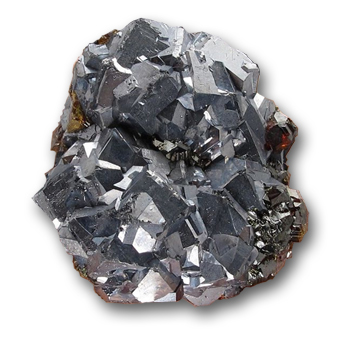
galena2Galena, a lead sulfide, is not only a source of lead, but of silver as well. Metal extraction is simplified by its low melting point. It is dark grey-silver in color, with an octahedral crystal structure. The metal surface can tarnish when exposed to air, darkening the color. It was named in 77AD by Pliny the Elder, from Greek “galene”, literally meaning lead ore.

Deposits can be found in England, Bulgaria, Australia, the USA, and many North African countries, among others. It is the State Mineral of Missouri and Wisconsin.

This mineral is used, and has been used, for a variety of applications. From kohl in ancient Egypt, lead shot, green glazes for pottery, and crystal radio sets. It has a variety of common names, such as “blue lead ore”, and “potter’s ore”.galena1
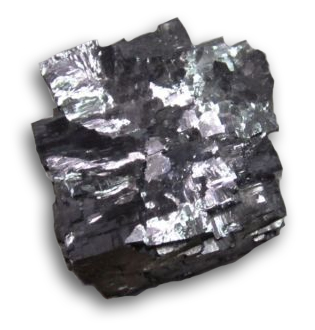
The chemical formula for Galena is PbS, and it has a hardness of 2.5-3 on the Mohs scale. Being mainly lead, it feels very heavy when held. Its specific gravity is 7.4-7.6, whereas pure lead is 11.3. Pyrite, an iron sulfide, has a specific gravity of 4.9-5.2.

http://en.wikipedia.org/wiki/Galena

http://www.mindat.org/min-1641.html

http://www.minerals.net/mineral/galena.aspx

Palache, Charles, Harry Berman & Clifford Frondel (1944), The System of Mineralogy of James Dwight Dana and Edward Salisbury Dana Yale University 1837-1892, Volume I: Elements, Sulfides, Sulfosalts, Oxides. John Wiley and Sons, Inc., New York. 7th edition, revised and enlarged, 834pp.: 200-204.
Amethyst

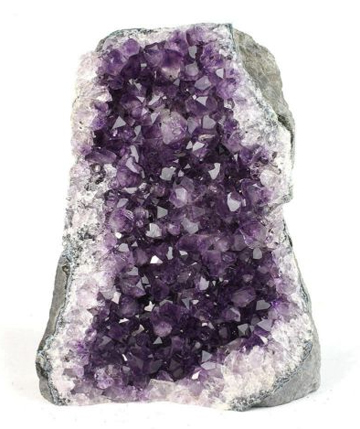
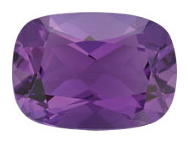
amethyst2Amethyst is a purple variant of quartz (yellow = citrine, green = prasiolite), with its color coming from iron impurities. Its name comes from the Greek “a-“ (not) and “methystos” (intoxicated), stemming from the belief that the stone protected against intoxication. It was also thought that the stone would make a person more clear-headed. Amethyst can be found world-wide, with large deposits found in Brazil, South Korea, Austria, Russia, and numerous other countries. Before large deposits were found, this stone used to be lumped with diamonds, rubies, and sapphires for its rarity and preciousness. With a hardness of 7 on the Mohs scale, it makes a good gemstone – fortunate, as it is the birthstone for February. Cutting the stone properly can be challenging. The crystals do not often have a uniform concentration of color, but vary in shades of purple and mauve. These crystals are often found in geodes – some of which are massive in size.amethyst1

Chemical Formula: SiO2

Kunz, George F. The Curious Lore of Precious Stones. New York City: Halcyon House, Blue Ribbon, 1930. Print.

http://www.mindat.org/min-198.html

http://www.gemdat.org/gem-198.html

http://www.gemstone.org/index.php?option=com_content&view=article&id=98:sapphire&catid=1:gem-by-gem&Itemid=14

Amazonite

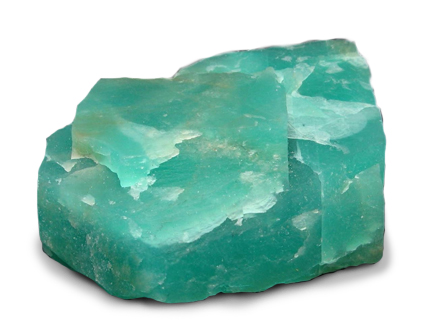
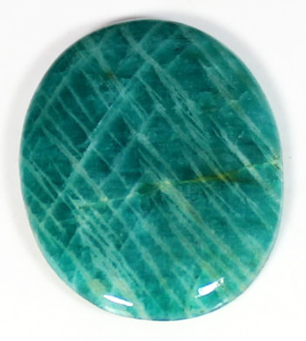
amazonite 2Amazonite, also called amazonstone, is a type of microcline feldspar which is translucent to opaque blue-green in color. It was named in 1847 by Johann Friedrich August Breithaupt. Even though the name implies a locality close to the Amazon, no deposits have yet been found nearby. Instead, it has been found in Ontario, Quebec, Italy, Russia, and Colorado. The color comes from traces of lead, not copper.

If used as a gemstone, it is generally cut into a cabochon due to its fragile nature. It has a hardness of 6-6.5 on the Mohs scale. The chemical formula for Amazonite is KAlSi3O8.amazonite 1

http://www.britannica.com/EBchecked/topic/18797/amazonstone

http://www.mindat.org/min-184.html

http://www.gemdat.org/gem-184.html

Teredo-bored Petrified Wood

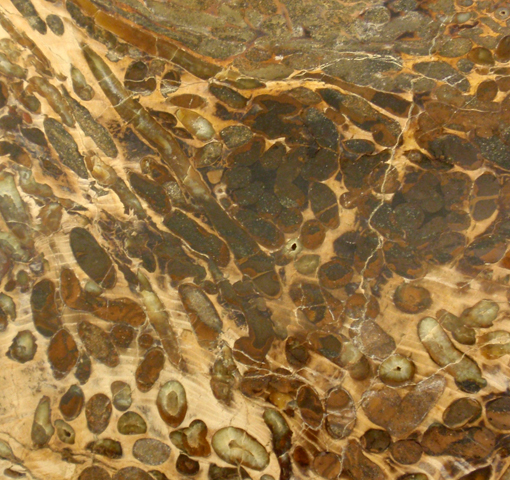
Teredo borings with woodgrain

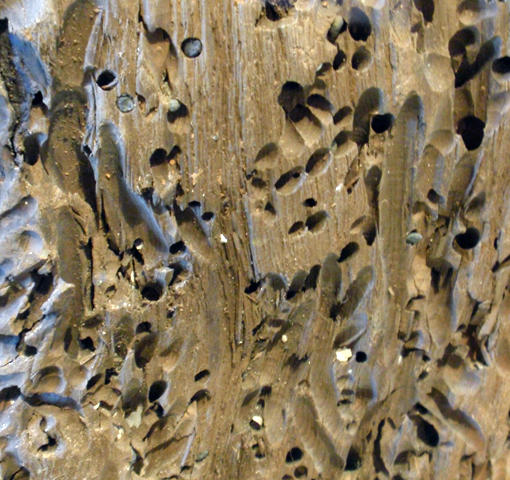
Teredo borings with woodgrain

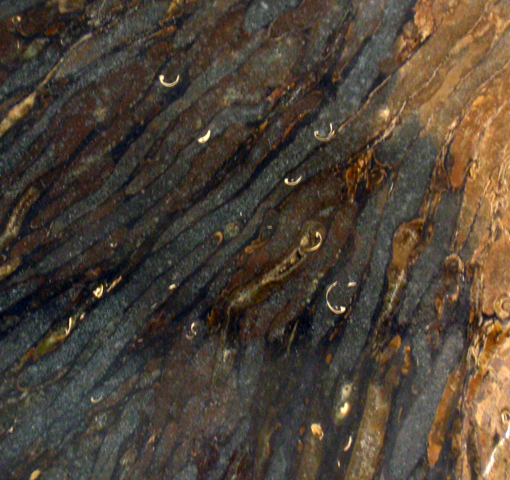
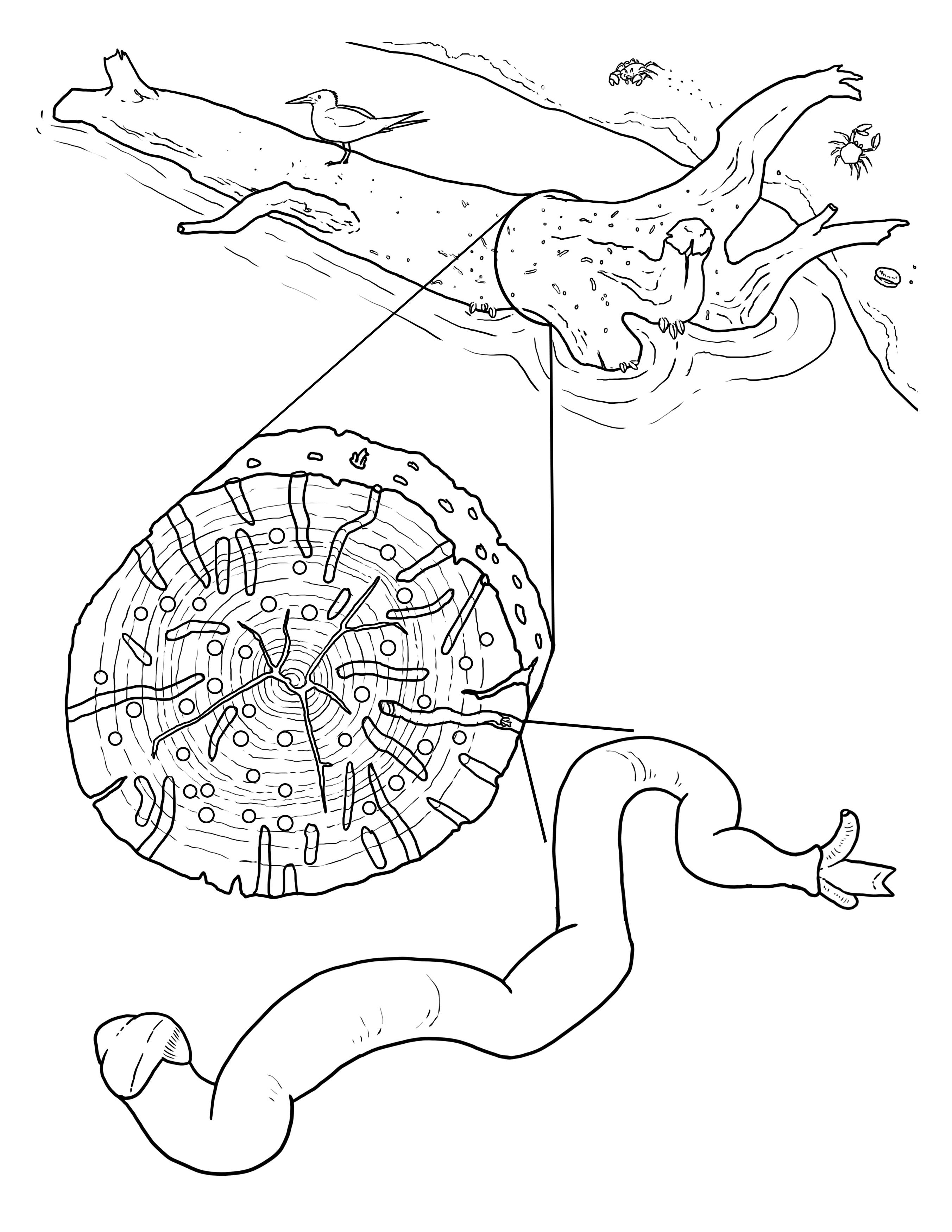
Teredo-bored petrified wood is North Dakota’s state fossil. It is found in 60 million year old Paleocene deposits, found in the southwestern area of the state. These are areas that were covered by the Cannonball Sea, now exposed at the surface. Before fossilizing, it was drift wood (ginkgo, bald cypress, metasequoia, etc.) that had been drilled (bored) into by small worm-like clams (Teredo), creating a Swiss-cheese effect.

Modern day example

Modern day example

Part of the fossilization included filling the borings with sediment or crystals, often seen as a different color or texture. If slabbed, the tiny clams can even be seen in cross section as little white crescents. The clams, also called shipworms, still pose a problem for wooden boats or docks today.

Borings with Teredo cross-sections

Borings with Teredo cross-sections

Teredo-bored petrified wood was adopted in 1967, and added to the Smithsonian Institution’s mineral collection. The selection was brought to the legislature by R. W. Carlson of Bismarck, former present of the Central Dakota Gem and Mineral Society, and H. A. Brady of Mandan. State Represenative W. G. Sanstead of Minot proposed the state fossil selection in House Bill 933.

Magnification of Teredo

Magnification of Teredo

https://www.dmr.nd.gov/ndgs/outofprint/NewsLetters/1993Spring.pdf (publication page 4 & 5)

http://ndstudies.gov/state_fossil

https://www.dmr.nd.gov/ndfossil/kids/FIND%20ISSUE%2011%20small.pdf

Gold

gold 1

Gold nugget

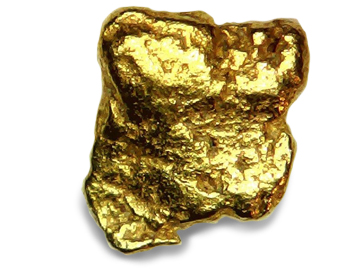
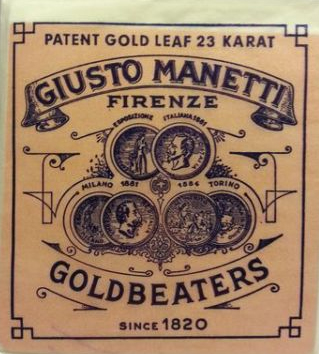
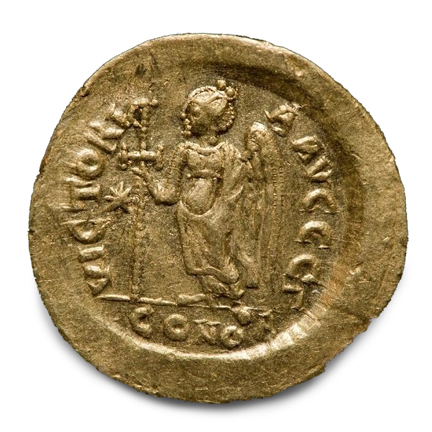
Gold is an element (atomic number 79), rather than a rock or mineral. A precious metal used in coins, jewelry, and more recently electronics, it has been coveted by humans for thousands of years. On the periodic table, gold is written as “Au”, which comes from the Latin word for gold: aurum. It is highly malleable, and can be beaten into thin sheets of leaf for artistic purposes such as illumination, or as a protective coating in industry. It is

Gold leaf

Gold leaf

often alloyed with copper or nickel, but in its pure state is non-reactive and does not tarnish upon exposure to air. By adding copper a more red color is achieved (rose gold). Blue with iron, purple with aluminum, and white with palladium, silver, or nickel. Along with the more obvious nuggets, gold is often found naturally as dust or flakes, embedded in rock or quartz.

Gold coin

Gold coin

http://www.livescience.com/39187-facts-about-gold.html

http://onlygold.com/Info/History-Of-Gold.asp

Rhodochrosite

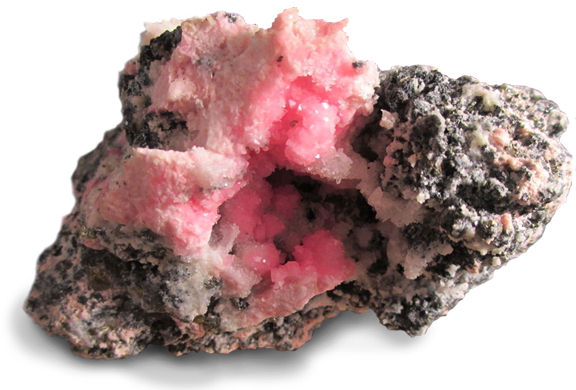
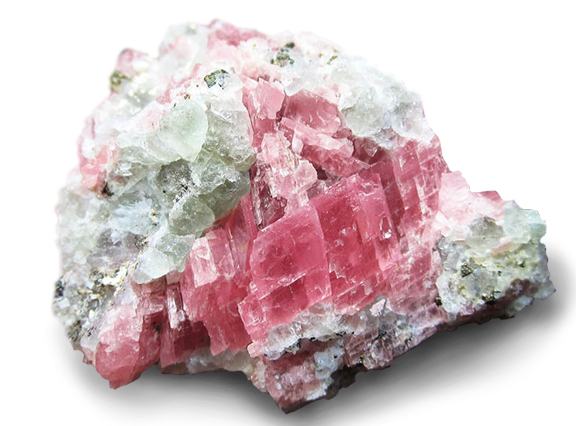
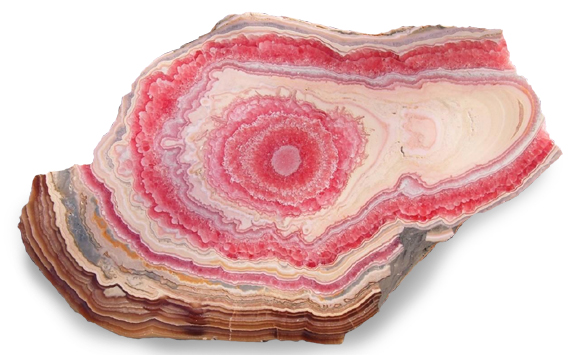
rhodochrosite 1Rhodochrosite is a translucent to transparent, ranging in colors from white, to pink, to red. It is a manganese carbonate, found in hydrothermal veins alongside copper, silver, and lead, and can be used as a manganese ore. When exposed to air, rhodochrosite tends to form a dark rind as it oxidizes. It is generally a massive, nodular, or botryoidal rhodochrosite 2form, however the rare transparent rhombohedral crystals can also be found. It has a hardness of 3.5-4 on the Mohs scale, has a white streak, and is soluble in warm hydrochloric acid. Due to its soft nature, and beautiful commonly banded colors, this mineral is often used as a carving medium, but rarely faceted. rhodochrosite 3Its chemical composition is MnCO3. Its name comes from Greek, literally meaning rose-colored.

Pellant, Chris. Rocks And Minerals. New York, Dorling Kindersley, Inc., 2000. Pg 100.

Busbey III, Arthur B.  Rocks & Fossils.  Time Life Books, 1997.  Pg 170.

Ammolite

ammolite 1

Ammonite – click for larger image

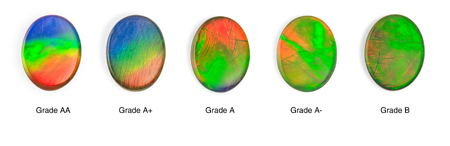
Ammolite is both fossil and gemstone. It comes from the aragonite mother-of-pearl surrounding ammonites – jokingly called “grandmother-pearl”. Many ammonites still exhibit an iridescent sheen to them, however the ones from mines in southern Alberta exhibit a rainbow spectrum of gem-quality colors. Aragonite in life is an unstable organic crystal form of carbonate, and generally when a shell fossilizes, as it’s already a mineral, simply reverts to a more stable form of calcite. With Ammolite, the aragonite layers haven’t reverted – and the more layers there are, the more colors are refracted.

ammolite 2

Ammolite grades

It was given gem status in 1981 by the World Jewelry Confederation. It is one of three organic gemstones – the other two being amber and pearls. If used in jewelry, because of the soft nature of the stone (only a 3.5-4 on the Mohs scale), it should only be set in earrings or pendants – not rings.

http://www.canadafossils.com/canadianammonites.php

http://en.wikipedia.org/wiki/Ammolite

http://www.ammolite.com/

Fluorite

fluorite purple

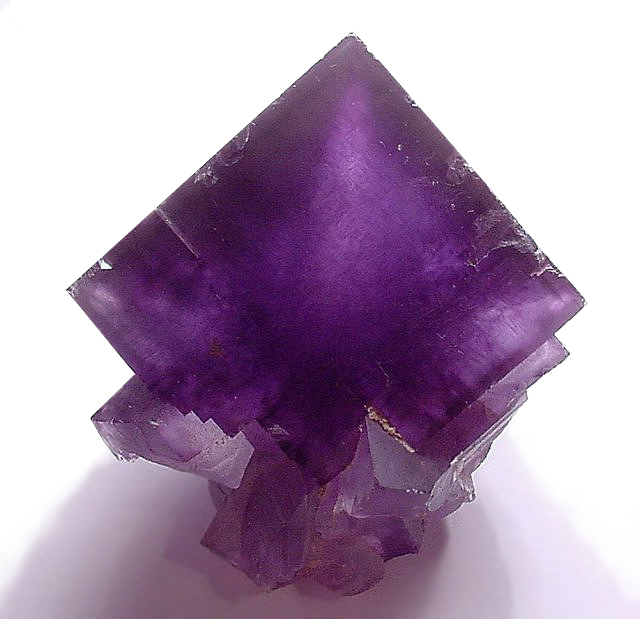
Purple fluorite octahedron

Group: Halide. Chemical formula is CaF2.

fluorite green

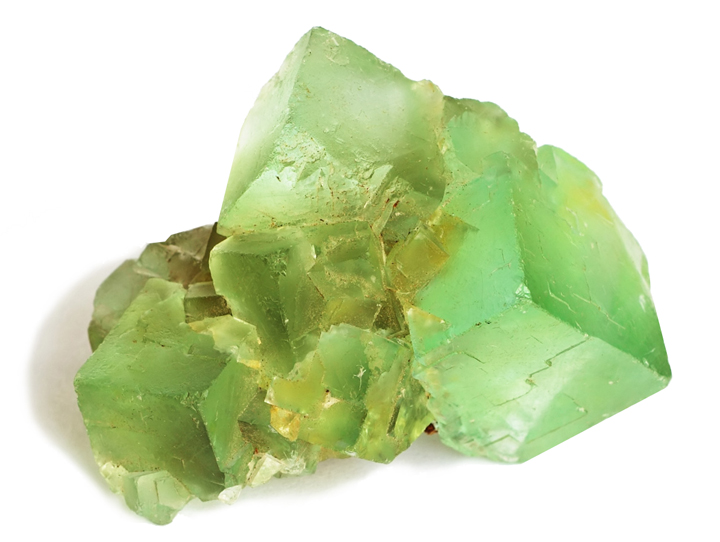
Green fluorite cubes

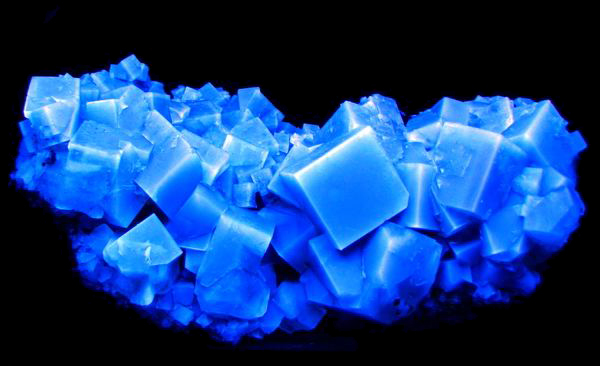
Fluorite is a translucent mineral that covers a rainbow of colors, yet has a clear streak. The crystal structure is cubic to octahedral, often with twinning. Like chalcopyrite, fluorite is found in hydrothermic veins, and hot springs, often alongside sulfides. It is fluorescent under ultraviolet light.

fluorite fluorescense

Fluorescent fluorite

The mineral has been used as lenses in telescopes and microscopes, a flux for smelting, and even as a source of fluoride for hydrofluoric acid. It was named in 1797 by Carlo Antonio Geleani Napione, from Latin – “fluor” meaning stream, or to flow – for its use as a flux. Fluorspar is also a common name. Fluorite is also used in carving and jewelry, however with a hardness of 4 on the Mohs scale, heavy wear is not recommended.

Pellant, Chris. Rocks And Minerals. New York, Dorling Kindersley, Inc., 2000. Pg 74.

http://www.minerals.net/mineral/fluorite.aspx

http://www.mindat.org/min-1576.html

Chalcopyrite

chalcopyrite 1

Chalcopyrite crystal form

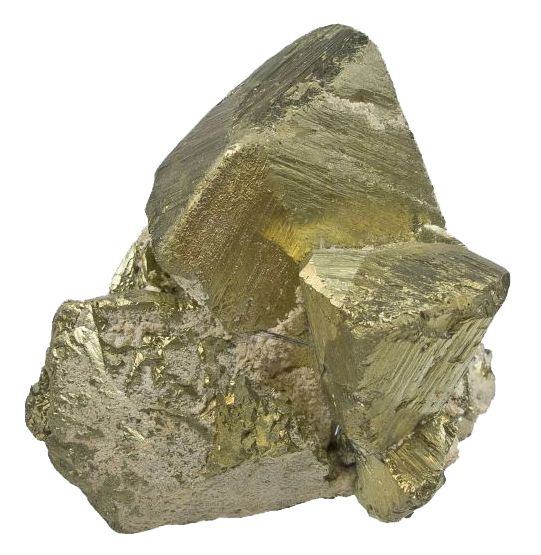
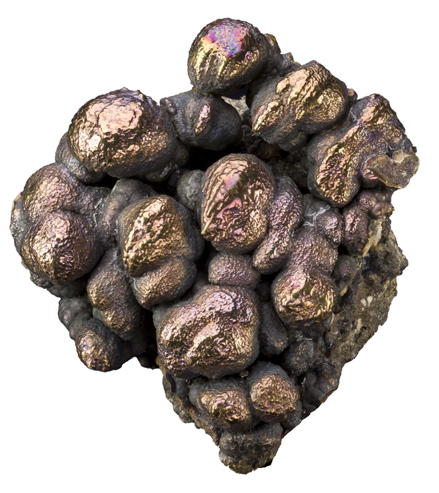
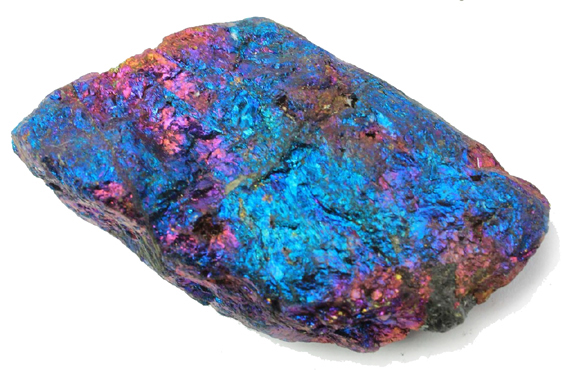
Chalcopyrite is a brassy-colored, copper iron sulfide. It was named by Johann Friedrich Henckel in 1725, from the Greek “chalkos” meaning copper, and “pyrites” meaning to strike fire. It has a green-black streak, yet tarnishes in a variety of iridescent purple, blue, and red. It sometimes goes by the term “peacock rock”. It is often mistaken for pyrite, but is a softer 3.5-4 on the Mohs scale. It is brittle, and can shatter if struck. It has poor cleavage, and fractures unevenly. It can be found in tetragonal crystal form, massive, and even botryoidal.

Chalcopyrite botryoidal

Botryoidal form

This mineral has been mined as a copper ore for thousands of years. Copper mixed with zinc creates brass, but mixed with tin creates bronze – a metal used in tools for ages. It is very common in sulfide veins, high-temperature hydrothermal veins, igneous dikes, and more. When oxidized, or weathered, chalcopyrite may form malachite, azurite, cuprite, and other minerals.

chalcopyrite peacock

“Peacock rock”

Group:  Sulfide.  The chemical formula is CuFeS2.

Klein, Cornelis and Cornelius S. Hurlbut, Jr., Manual of Mineralogy, Wiley, 20th ed., 1985, pp. 277 – 278

http://en.wikipedia.org/wiki/Chalcopyrite

http://www.mindat.org/min-955.html

http://www.esci.umn.edu/courses/1001/minerals/chalcopyrite.shtml

Tanzanite

Tanzanite crystal

Tanzanite crystal

Tanzanite

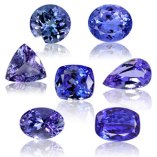
Discovered in 1967 in Tanzania, tanzanite (named by Tiffany & Co.) is one of the more recent birthstones for December (as of 2002, via the American Gem Trade Association).  While the stone may be light violet in some cases, darker shades of periwinkle with hints of purple are sought after for higher gem quality.  A blue variety of the gemstone zoisite, tanzanite has a Mohs harness of 6.5-7 – not particularly tough for a gemstone.  Corundum (rubies and sapphires) sit at a healthy 9.0 on the Mohs scale.

Tanzanite, faceted

Tanzanite, faceted

The blue color is caused by trace amounts of vanadium within the ziosite – much like trace elements can also cause various colors of diamonds.  The blue can be enhanced and brought out in the stone by careful addition of heat.  Tanzanite crystals are also pleochroic – meaning from different angles they exhibit different colors.  The same crystal from one direction may look blue, and another direction look red or brown – thus faceting the stone can be challenging.

The chemical composition of tanzanite is:  Ca2Al3(SiO4)3(OH)

References:

Newman, Renee.  Exotic Gems: How to Identify and Buy Tanzanite, Ammolite, Rhodochrosite, Zultanite, Moonstone & Other Feldspars.  International Jewelry Publications, 2010.

http://www.jtv.com/library/tanzanite-gemopedia.html

http://www.minerals.net/gemstone/tanzanite_gemstone.aspx

http://www.gia.edu/tanzanite-quality-factor