Author Archives: NDrockclub

Unknown's avatar

About NDrockclub

Central Dakota Gem & Mineral Society, based out of Bismarck, ND. Local rock club.

Catlinite Pipestone & Pipes

by Michael Simonson


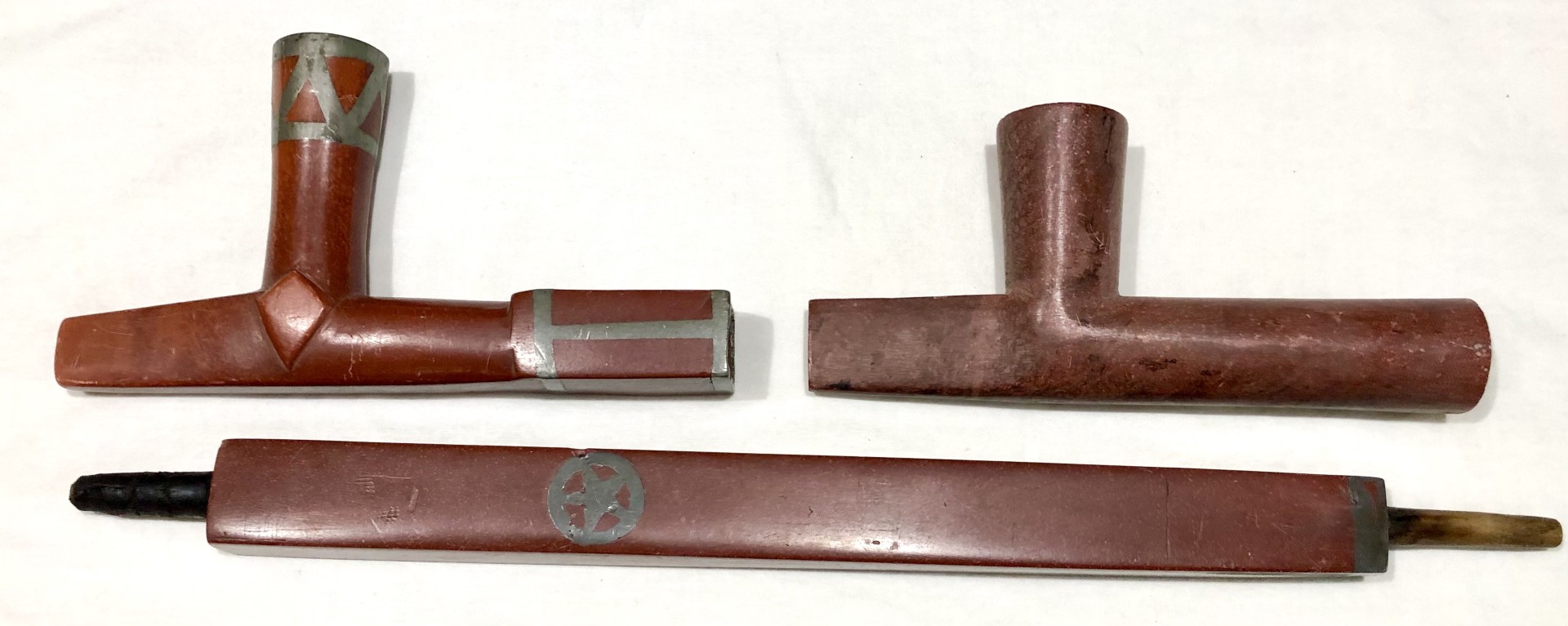
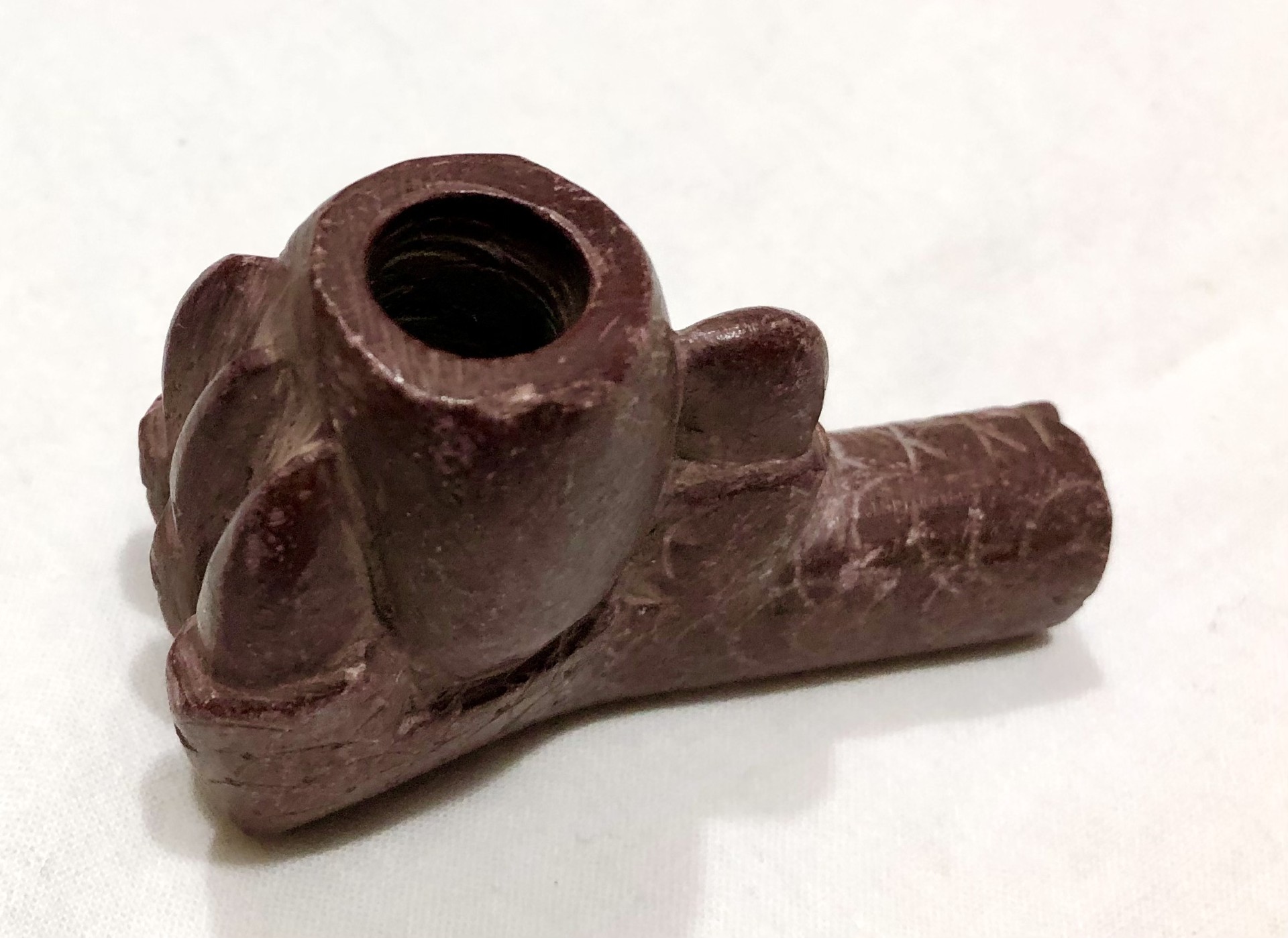
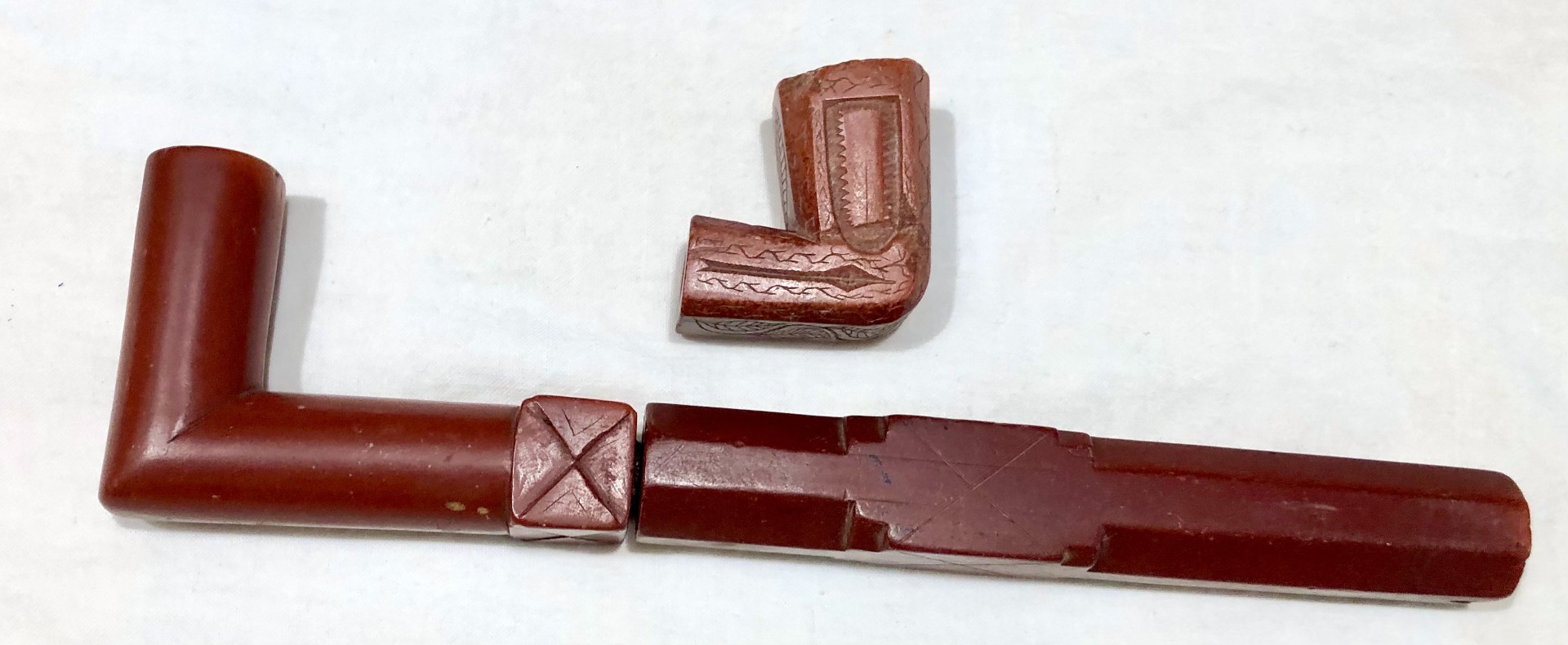
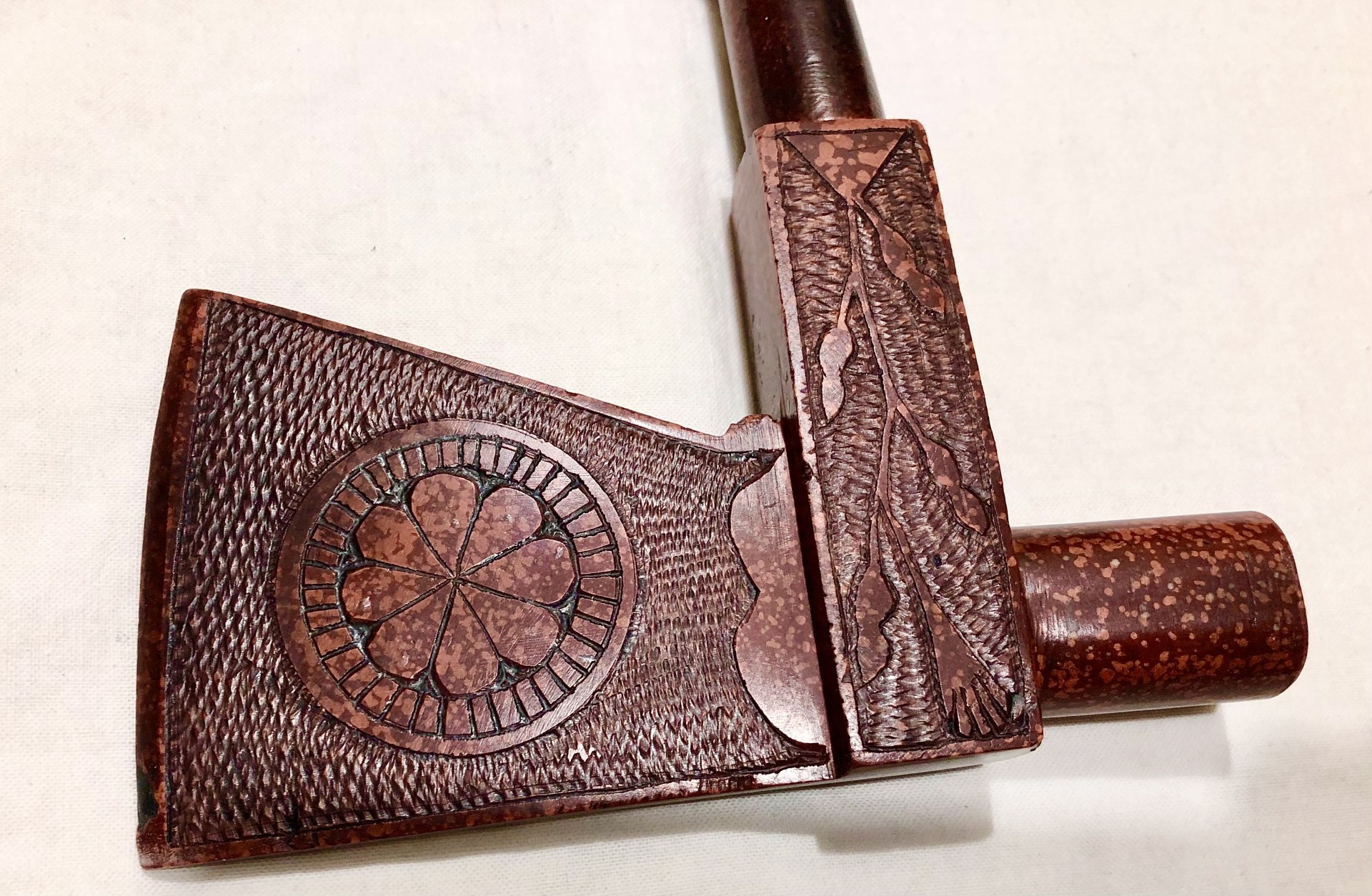
Catlinite is the name for the sacred red pipestone of the Plains Tribes. It is named after George Catlin, the famous painter who visited, painted, and described the quarries in 1835. There are several similar varieties of red pipestone, but they are generally considered inferior to catlinite. In this article, we will examine the physical description & mining of catlinite, its cultural significance, and its primary use for making tobacco pipes.

Physical description: Catlinite is a type of argillite claystone. It is formed primarily from kaolinite clay colored red by oxidized hematite. Although technically a sedimentary rock, the clay underwent metamorphic-like changes 1.5 billion years ago. These processes transformed the clay into the solid stone we know today.

Catlinite is embedded within Sioux Quartzite, which is used in regional construction. Many buildings in nearby Minnesota, South Dakota, and Iowa are built from this beautiful red stone. Native Americans may not appreciate its presence in the quarries, however, as about 8-10 feet of this extremely hard stone must be removed by hand to get to the catlinite layer.


Catlinite pipestone is only found in pipestone quarries along the Pipestone Creek, in the Pipestone National Monument, near Pipestone City, in Pipestone County, MN. The cleaver reader no doubt notes a theme here. Catlinite’s primary use has been for pipe making, for which it is ideally suited.

Mining: Catlinite has been mined for at least 3,000 years. It has become more difficult to mine over time as the layer slopes deeper to the east. This has resulted in thicker layers of the Sioux Quartzite having to be removed to reach the catlinite. No power tools are allowed for mining in the Pipestone National Monument. Sledgehammers, picks, wedges, large chisels, shovels, and buckets are used. First, miners must remove the topsoil. Afterward comes the difficult and time-consuming process of removing the Sioux Quartzite. Finally, the layer of catlinite can be carefully removed. The entire mining process can take weeks, months, seasons or years. The catlinite layer is less than 1 foot thick and split into 1-3 inches bands. The thickest bands are most desirable for making pipes. The thin bands are generally unsuitable for pipe making but have other uses.


There are many small quarries in the Monument, each claimed by a Native American group. Only registered members of federally recognized tribes may mine catlinite. It can take up to 5 years for qualified Native Americans to receive a permit. Given this and the lengthy mining process, it is understandable that any catlinite that reaches the market is expensive. Materials sold as catlinite are usually one of the other red pipestones that
resemble catlinite. Although catlinite souvenirs were sold for decades, this is less common today. Most Native American Tribes disapprove of the sale of catlinite.

Cultural Significance: There are 23 federally recognized tribes with a documented historical connection with catlinite, along with many more bands, clans, societies etc. Each has cultural traditions with catlinite. One tradition was that various tribes could come to mine in peace. Tribal hostilities were generally set aside at the quarries. Many stories and beliefs are associated with catlinite. One Sioux (Lakota, Dakota, Nakota) story concerns Wakan Tatonka – their highest spirit/god. Wakan Tatonka (God) sent White Buffalo Calf Woman with a sacred catlinite pipe to give to humans so man could communicate with God. The same pipe that she brought to humans is still in possession of the tribes. It is kept safe and in secret by the Keeper of the Pipe. No white man has ever seen this pipe. It allows mankind to make ceremonial catlinite pipes that bring prayers and sacred vows to God.


Most pipes are personal pipes, not ceremonial pipes. A ceremonial pipe cannot be identified by appearance. They are catlinite pipes dedicated in a special ceremony where a helpful spirit enters the pipe. That spirit sends the smoke to God with the help of the four winds, carrying the prayers and vows of the ceremony participants. Often called peace pipes, they create sacred bonds of peace ranging from marriages to peace treaties between nations. Personal pipes are smoked as a meaningful act of friendship and peace between people, but this does not constitute a sacred bond before
God.


Of the many myths associated with catlinite, two are particularly interesting. One is that catlinite is red because it is made from the flesh and blood of people’s ancestors. The other is the flip side of that—that people have red flesh and blood because they were made from pipestone. Both convey the deep connection people have with catlinite.

Catlinite Pipes: Catlinite was used primarily for pipes. In keeping with its primary use, we will examine the primary types of these pipes.

Tube Pipes. The simplest pipe is the tube pipe, which is also one of the earliest types. It is a simple straight tube with no projecting bowl. They often were slightly tapered, with the wide end being the ‘bowl’ for the tobacco. They were often rectangular in cross-section and could be carved with winding motifs, etched designs, etc.

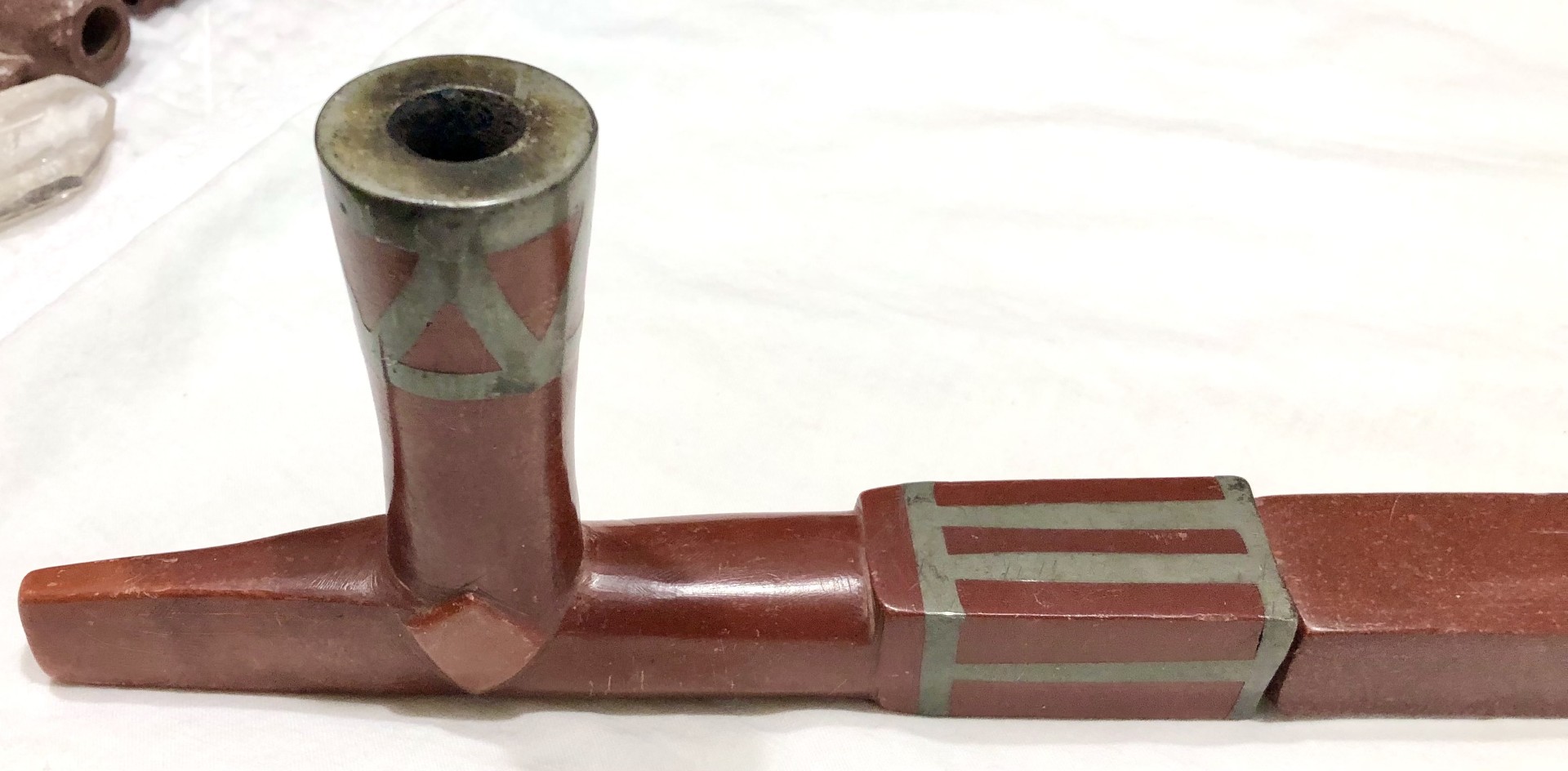
  1. Elbow Pipes. The next simplest and most common is an elbow pipe. These have an “L” shape similar to Euro-American pipes. They range in style from simple to elaborate designs. They can be just a bowl with a wood stem or may have catlinite stems.
  2. Calumets. Calumets are perhaps the most familiar catlinite pipe. Named by French fur traders, the name generally means “pipe of peace.” It was the predominant style used during the fur trade industry. They are large elbow pipes with an “anterior projection” in the front of the bowl. They are sometimes called “Plains Pipes” because that is the geographical area where they were most commonly used. They are also known as ‘”Peace Pipes” as a translation of the French name.
  3. Crested Pipes. Crested pipes are a subset of elbow or calumet pipes. They have a thin, vertical ridge running down the middle of the top of the pipe’s stem side but not down the attached stem. They typically have a row of notches on the ridge top. Crested pipes are an older pipe type that was used less at the time of white contact.
  4. Effigy Pipes. Effigy pipes are wholly or partially in the shape of animals or objects. Bison effigy pipes are one type – understandable given their importance of Bison. Hopewellian pipes frequently have bird effigies. Other animal effigy pipes include beaver, horse, wolves, etc.
  5. Claw Pipes. Claw effigy pipes are interesting in that they are an effigy of only one part of an animal – a raptor’s (presumably eagle) claw. The claw appears to be holding the pipe bowl between its talons, with the leg forming the stem.
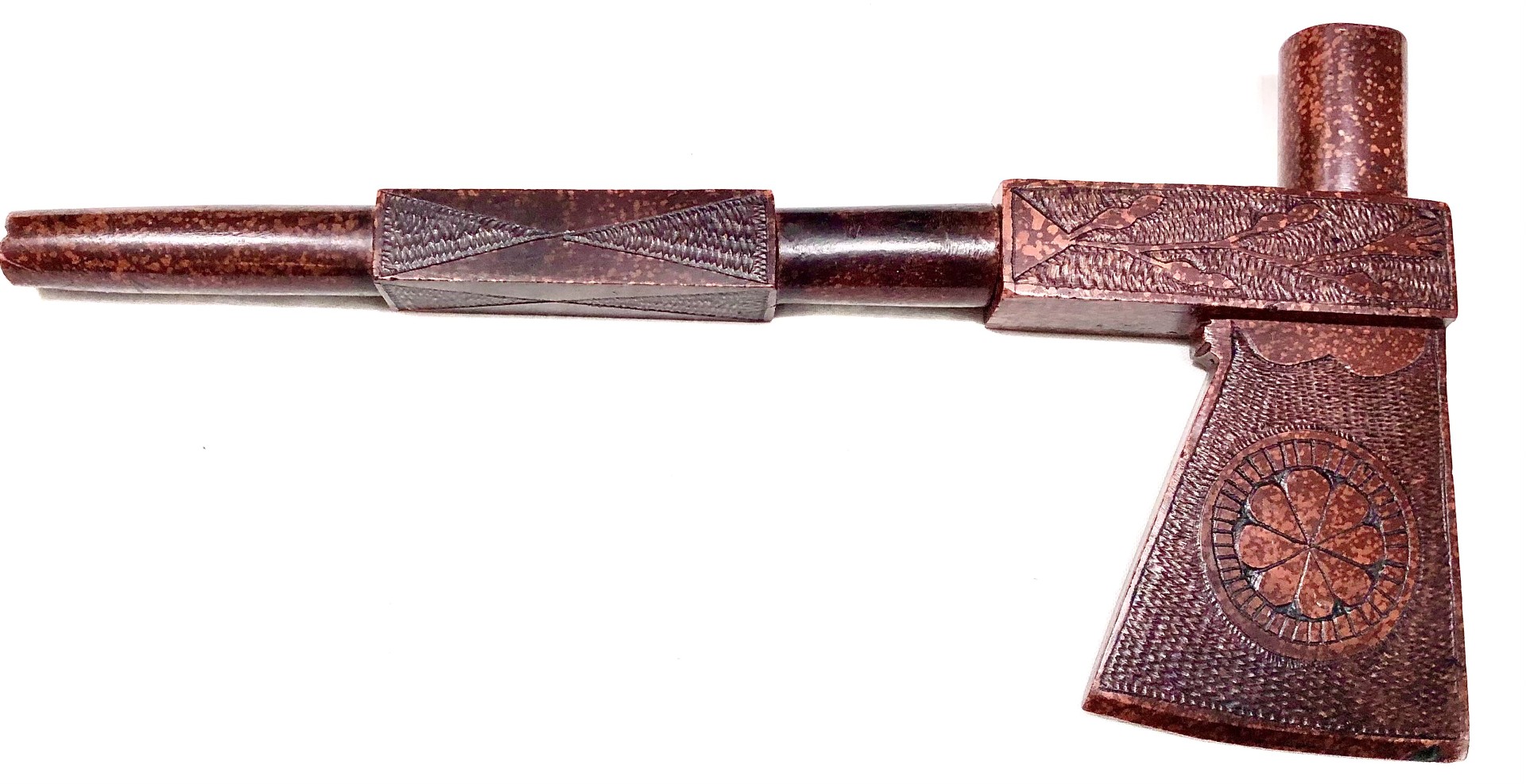
  6. Trade Hatchet Effigy Pipes. Trade hatchet effigy pipes are very unusual in that they are a pipe effigy of a pipe, and not something from nature. They are an effigy of a French fur trade iron hatchet pipe. This fur trade item was an unusual combination of functional hatchet and pipe. The bowl was opposite the blade and smoked through a top projection. Catlinite pipes of this type copied the form including the hatchet handle in catlinite. Like the iron trade item, they were functional pipes, but were unusable as hatchets. They typically were highly decorated. They are most commonly associated with the Ojibewa/Chippewa, as they were actively engaged in the French fur trade.

Catlinite was ideal for pipes because it is very heat resistant. It does not crack/shatter from intense heat as it has a low and uniform heat expansion rate. It is interesting to note that catlinite comes from kaolinite clay which is typically used for pottery for the same reasons.

Other uses of Catlinite: Catlinite had many other secondary uses such as:

  • Personal jewelry: Amulets, round earplugs, beads, bangles, tubes.
  • Effigies: similar to ones on pipes, but freestanding. For spiritual, decorative, and unknown uses.
  • Incised tablets of presumably spiritual significance. Drawings of people, animals, spiritual beings, etc. Potential maps.
  • Post-contact souvenirs such as salt & pepper shakers, stamp holders, ashtrays, toothpick holders, and many effigies (arrowheads, turtles, tomahawks, etc.).

In closing, catlinite is a beautiful buttery smooth red stone that has been an important part of Native American culture for thousands of years. It is ideally suited for pipes, and has been used in this capacity to create a wide range of pipes in many forms. These pipes were used for the highest expression of spiritual beliefs, and for the simple pleasure of sharing a pleasant smoke with a friend.

Swedish Blue

Fall of 2023 we made the trek up to Minot, ND, to visit the Nordic HostFest. While wandering around we came across a silversmith booth that specialized in “Swedish Blue”.  Not knowing anything about this “stone” I took a closer look.  They had raw samples for sale in a basket – and I foolishly didn’t purchase any – as well as numerous beautiful cabochons worked up in silver bezel mountings.  The stone looked like a silicate, with conchoidal fracturing similar to what you might see with opal, and was streaked with varying shades of sky or stormy blues.  I purchased a pendant and earrings, then later visited their website to learn more.

I highly suggest reading more about the silversmiths and stones on their page:  https://www.swedishbluejewelry.com/

The trade name or gemstone name for the stone is “Swedish Blue” – especially for us English speakers that may have difficulties with Nordic dialects.  However the name for the raw stone in Swedish is called “Bergslaggsten” – or stone from Bergslagen. 

Beginning over 300 years ago in Sweden, the area of Bergslagen was mined heavily for iron ore.  The ore was smelted in coal-fired ovens where the ore and surrounding rock was melted.  When it reached a high enough temperature, a slag glaze would form at the top, which was scraped off of the metal and discarded.  The slag comes in many colors, but the higher concentration of blues is what set this particular stone apart. 

I was correct in my initial guess that it was high in silica – it is very glass-like, with copper giving it much of the blue-green colors.  Much like volcanic glass, but from an iron foundry.  The slag was discarded, and eventually grown over with local vegetation – only to be found by a Swedish goldsmith centuries later.

North Dakota paleontologists launch daily kids program amid virus outbreak

Read the article here <—-

NDGS

Becky Barnes, a paleontologist and lab manager with the North Dakota Geological Survey, holds a sample of coprolite, or fossilized crocodile poop, as she talks during a live video conference with students and families about the state’s geology from her office at the North Dakota Heritage Center and State Museum on Thursday. Clint Boyd, senior paleontologist, far left, said beginning at 10 a.m., Monday through Friday the 45-minute broadcast gives parents a way to entertain and educate their children as schools across the state remain closed due to the outbreak of the coronavirus. As Barnes presents topics related to prehistoric fossils and geology, Boyd answers questions by the audience through a chat window.

Hematite

[Guest Author Matt Doyle]

Hematite, famous modernly for the steel-grey jewelry often made from it, is more commonly a rust-red ore when found in mining iron[1].  A iron oxide (Fe2O3), hematite’s name comes from haema, the Greek word for blood[2], and most of its direct historical impact comes from that red form.  While hematite is incredibly common – the most common form of iron ore[3] – even in ancient times it was appreciated for itself, and not only for the metal it could produce.  In modern times, magnets are used to harvest hematite from mine tailings.

hematite1     Red hematite most commonly possesses an earthy luster, appearing anywhere from rust-colored to Powdered red hematite is also known as rouge.  Perhaps most famous as a cosmetic used for centuries to redden the skin, it is the same substance as jeweler’s rouge, used to polish metal and gemstones, and also frequently used to help strop a barber’s straight razor.  Red ochre and yellow ochre painting pigments also owe their color to a mixture of red hematite and clay – unhydrated in red ochre, and hydrated in yellow[4].  Maybe most strikingly, hematite is the basis of red chalk, and red chalk drawings have many prominent places in human history and the history of art, including the sketches of Leonardo DaVinci, the body painting of corpses in paleolithic cultures one hundred and sixty to eighty thousand years ago[5], and numerous cave paintings dating back as much as forty thousand years[6].  Red chalk mines dates back as far as 5000 BCE.

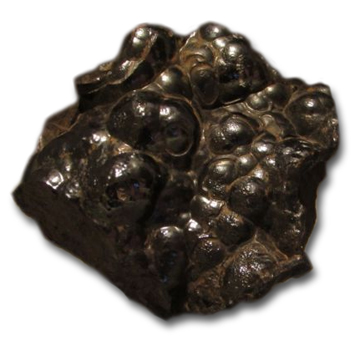
Grey hematite, unlike the “bloodstone” variety that gave it its name, has a metallic luster, and can appear almost like a dark mirror when sufficiently polished.  Faceted, it appears nearly black, and smooth, it has a gray, lustrous tone similar to a black pearl.  Used as a gemstone in jewelry, for gilding, or for carved intaglios, it was especially popular in Victorian England, and is still used today, in part because it is common enough to be relatively affordable. In its more jewel-like form, it has been sought after for over two millennia, since the Etruscans found deposits of it on the island of Elba.

hematite2     Outside of iron mines, hematite is commonly found in banded iron formations, hot springs, clay banks, and other places where iron interacts with water[7] (or more rarely, without water, as a result of volcanic activity).  Whether grey or red, it always leaves a red streak[8] (and a grey stone leaving a red streak is often striking and startling to students in the lab seeing it for the first time). Hematite often contains enough inclusions of magnetite to appear attracted to magnets, however, hematite itself is only weakly ferromagnetic when encountered at room temperature.  Its specific magnetic properties are variable in peculiar ways depending on the scale of the hematite crystal, and its small magnetic moment, as well as the temperatures at which it transitions from antiferromagnetic to paramagnetic, have been the subject of much discussion since the 1950s (and as such, could make up an essay – or many scholarly papers – of their own).

[1] https://en.wikipedia.org/wiki/Hematite

[2] http://www.mindat.org/min-1856.html

[3] http://geology.com/minerals/hematite.shtml

[4] http://www.mineralszone.com/minerals/ochre.html

[5] https://en.wikipedia.org/wiki/Pinnacle_Point

[6] http://www.eurekalert.org/pub_releases/2007-10/asu-rfe101207.php

[7] http://mars.nasa.gov/mer/spotlight/hematite01.html

[8] http://www.minerals.net/mineral/hematite.aspx

July 10 Harmon Lake

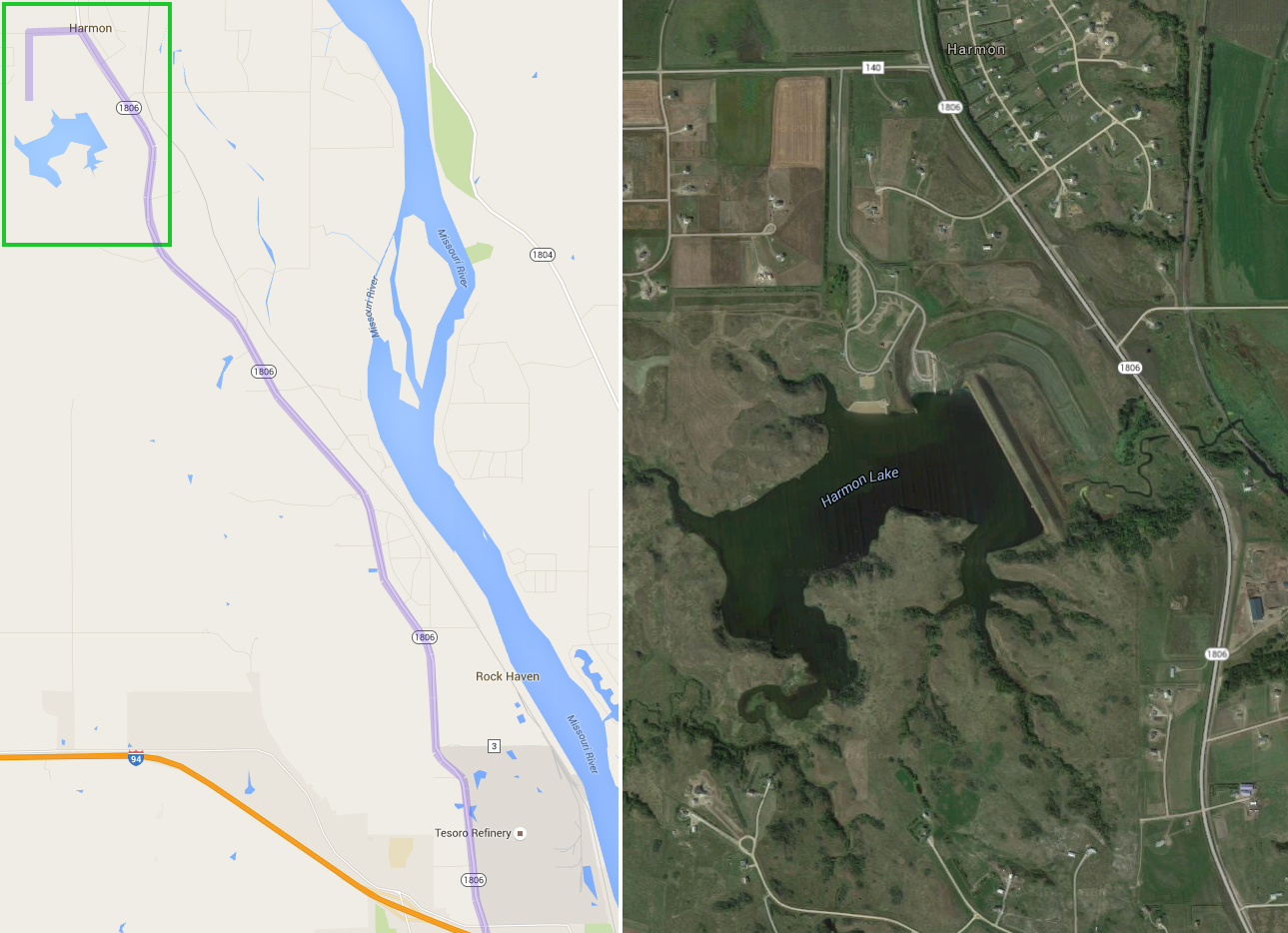
Come join us on July 10th, 1pm, up at Harmon Lake to learn about Cannonball Concretions.  Follow 1806 north of Mandan, about 11 miles.  Shelter 2.

HarmonLake

Grit – Treasures of Sea & Earth

Treasures of Sea & Earth supply grit for your rock tumbling needs.  For club discounts, please see the Member page.  For more information, please check out http://treasuresofseaandearth.com/ Currently available:

400                        5lb: $30.00         1lb: $6.00

600                        5lb: $30.00         1lb: $6.00

46/70                    5lb: $18.80        1lb: $4.00

120/220                5lb: $21.00        1lb: $4.20

Tin Oxide             5lb: $145.00     1lb: $29.00

Tripoli Powder   5lb: $18.80         1lb: $4.00

Plastic pellets     1lb: $4.20

Gypsum

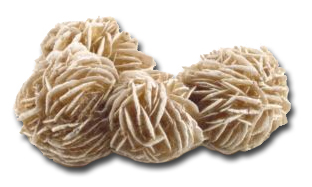
The mild-mannered gypsum is not only a pretty sulfate to look at, but is harvested for numerous functions. The crystals are tabular, and often twinned. It can also form massive, granular, and fibrous habits. Radiating forms are called “daisy gypsum,”, and rose-shaped forms “desert rose.” Gypsum tends to be fairly drab with color, varying from near colorless, white, and gray, to a more green, yellow, or reddish hue. Its name comes from the Greek word “gypsos,”, meaning chalk or plaster.

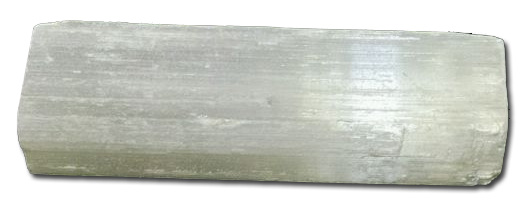
It is mined for use as a fertilizer, plaster, chalk, and sheetrock / gypsum board. The granular form called alabaster is used in carving and sculpture. “Plaster of Paris” is dehydrated gypsum – by adding water back into the powder, the mixture creates an exothermic reaction (gives off heat), and “sets” into a hardened form. This is useful for making casts of objects. The fibrous crystal form is called “satin spar” and “senelite.”

gypsum 3

Selenite – fibrous form

gypsum 4

Alabaster – granular gypsum

gypsum 2

Desert Rose – rosette gypsum

Gypsum has a white streak, but ranges from transparent to opaque. It is a very common mineral found in many locations. It can be deposited from lakes and seawater, hot springs, and other evaporative environments.

**Becky Trivia** Two fossil sites across North Dakota, on opposite ends of the state, hold gypsum. To the east, the Pembina Gorge locality once held a vast inland sea. Gypsum is so plentiful there it is the main mineral replacing the mosasaur and fish fossils, giving them a very soft, fragile form. Just off site, people can wander and pick up satin spar spears ranging from clear to black. To the west, the Whiskey Creek locality was once a swampy environment similar to the everglades. Sheets of gypsum can be found in and around those crocodile fossils as well.

The chemical formula is CaSO4·2H2O, and a hardness of 2 on the Mohs scale.


Pellant, Chris. Rocks and Minerals. New York: Dorling Kindersley, 1992. Print. Pg. 110.

http://www.minerals.net/mineral/gypsum.aspx

http://www.mindat.org/min-1784.html

Malachite

malachite3

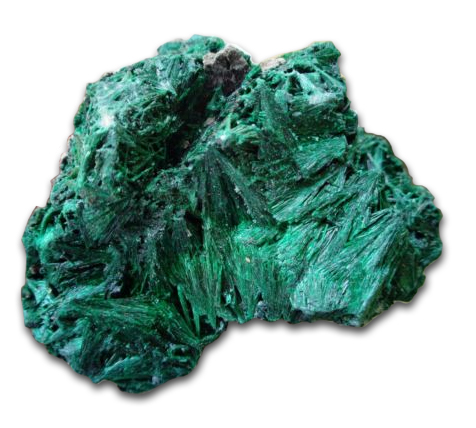
Fibrous malachite

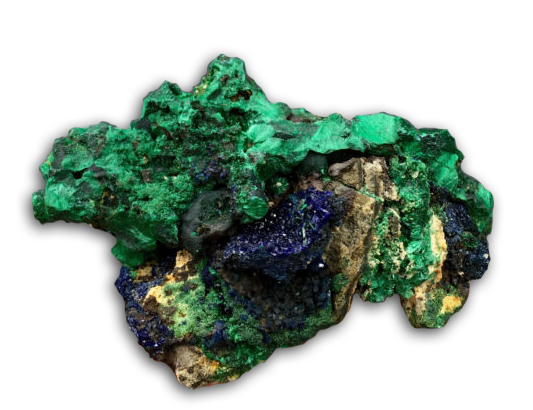
Malachite is an intense green colored, copper carbonate mineral. Instead of being a solid color, it is often banded in shades of green. While it can form tabular and twinned crystals, it is more often seen as botryoidal masses, or stalactitic, with a fibrous banded structure or crusts. Malachite can commonly be found with azurite. It has a hardness of 3.5-4 – soft enough to carve readily, yet still taking a polish. The stone is used for decoration, ornamentation, and jewelry. It can also be crushed and made into a green pigment. It was originally worn to ward off evil spirits.

Malachite comes from many locations, including Russia, Africa, Australia,

malachite2

Malachite with azurite

Brazil, and Arizona. It was named after the Greek word “mallows”, alluding to its leafy green color. It has also been called Atlas ore and Green Copper.

The chemical formula is: Cu2CO3(OH)2


http://www.minerals.net/mineral/malachite.aspx

http://www.mindat.org/min-2550.html

Pellant, Chris. Rocks and Minerals. New York: Dorling Kindersley, 1992. Print. Pg. 105.

Busbey, Arthur Bresnahan. Rocks & Fossils. Alexandria, VA: Time Life, 1996. Print. Pg. 174