
by Michael Simonson
Catlinite is the name for the sacred red pipestone of the Plains Tribes. It is named after George Catlin, the famous painter who visited, painted, and described the quarries in 1835. There are several similar varieties of red pipestone, but they are generally considered inferior to catlinite. In this article, we will examine the physical description & mining of catlinite, its cultural significance, and its primary use for making tobacco pipes.
Physical description: Catlinite is a type of argillite claystone. It is formed primarily from kaolinite clay colored red by oxidized hematite. Although technically a sedimentary rock, the clay underwent metamorphic-like changes 1.5 billion years ago. These processes transformed the clay into the solid stone we know today.
Catlinite is embedded within Sioux Quartzite, which is used in regional construction. Many buildings in nearby Minnesota, South Dakota, and Iowa are built from this beautiful red stone. Native Americans may not appreciate its presence in the quarries, however, as about 8-10 feet of this extremely hard stone must be removed by hand to get to the catlinite layer.
Catlinite pipestone is only found in pipestone quarries along the Pipestone Creek, in the Pipestone National Monument, near Pipestone City, in Pipestone County, MN. The cleaver reader no doubt notes a theme here. Catlinite’s primary use has been for pipe making, for which it is ideally suited.
Mining: Catlinite has been mined for at least 3,000 years. It has become more difficult to mine over time as the layer slopes deeper to the east. This has resulted in thicker layers of the Sioux Quartzite having to be removed to reach the catlinite. No power tools are allowed for mining in the Pipestone National Monument. Sledgehammers, picks, wedges, large chisels, shovels, and buckets are used. First, miners must remove the topsoil. Afterward comes the difficult and time-consuming process of removing the Sioux Quartzite. Finally, the layer of catlinite can be carefully removed. The entire mining process can take weeks, months, seasons or years. The catlinite layer is less than 1 foot thick and split into 1-3 inches bands. The thickest bands are most desirable for making pipes. The thin bands are generally unsuitable for pipe making but have other uses.
There are many small quarries in the Monument, each claimed by a Native American group. Only registered members of federally recognized tribes may mine catlinite. It can take up to 5 years for qualified Native Americans to receive a permit. Given this and the lengthy mining process, it is understandable that any catlinite that reaches the market is expensive. Materials sold as catlinite are usually one of the other red pipestones that
resemble catlinite. Although catlinite souvenirs were sold for decades, this is less common today. Most Native American Tribes disapprove of the sale of catlinite.
Cultural Significance: There are 23 federally recognized tribes with a documented historical connection with catlinite, along with many more bands, clans, societies etc. Each has cultural traditions with catlinite. One tradition was that various tribes could come to mine in peace. Tribal hostilities were generally set aside at the quarries. Many stories and beliefs are associated with catlinite. One Sioux (Lakota, Dakota, Nakota) story concerns Wakan Tatonka – their highest spirit/god. Wakan Tatonka (God) sent White Buffalo Calf Woman with a sacred catlinite pipe to give to humans so man could communicate with God. The same pipe that she brought to humans is still in possession of the tribes. It is kept safe and in secret by the Keeper of the Pipe. No white man has ever seen this pipe. It allows mankind to make ceremonial catlinite pipes that bring prayers and sacred vows to God.
Most pipes are personal pipes, not ceremonial pipes. A ceremonial pipe cannot be identified by appearance. They are catlinite pipes dedicated in a special ceremony where a helpful spirit enters the pipe. That spirit sends the smoke to God with the help of the four winds, carrying the prayers and vows of the ceremony participants. Often called peace pipes, they create sacred bonds of peace ranging from marriages to peace treaties between nations. Personal pipes are smoked as a meaningful act of friendship and peace between people, but this does not constitute a sacred bond before
God.
Of the many myths associated with catlinite, two are particularly interesting. One is that catlinite is red because it is made from the flesh and blood of people’s ancestors. The other is the flip side of that—that people have red flesh and blood because they were made from pipestone. Both convey the deep connection people have with catlinite.
Catlinite Pipes: Catlinite was used primarily for pipes. In keeping with its primary use, we will examine the primary types of these pipes.
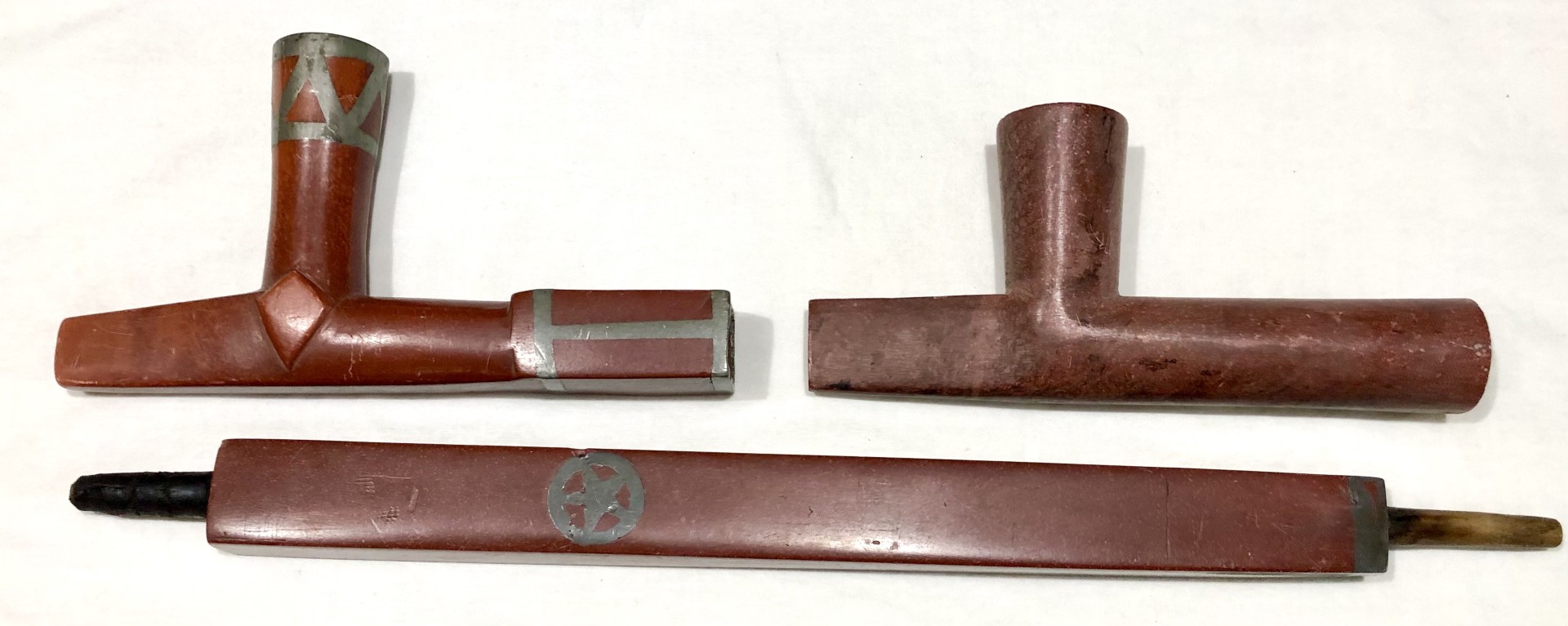
Tube Pipes. The simplest pipe is the tube pipe, which is also one of the earliest types. It is a simple straight tube with no projecting bowl. They often were slightly tapered, with the wide end being the ‘bowl’ for the tobacco. They were often rectangular in cross-section and could be carved with winding motifs, etched designs, etc.
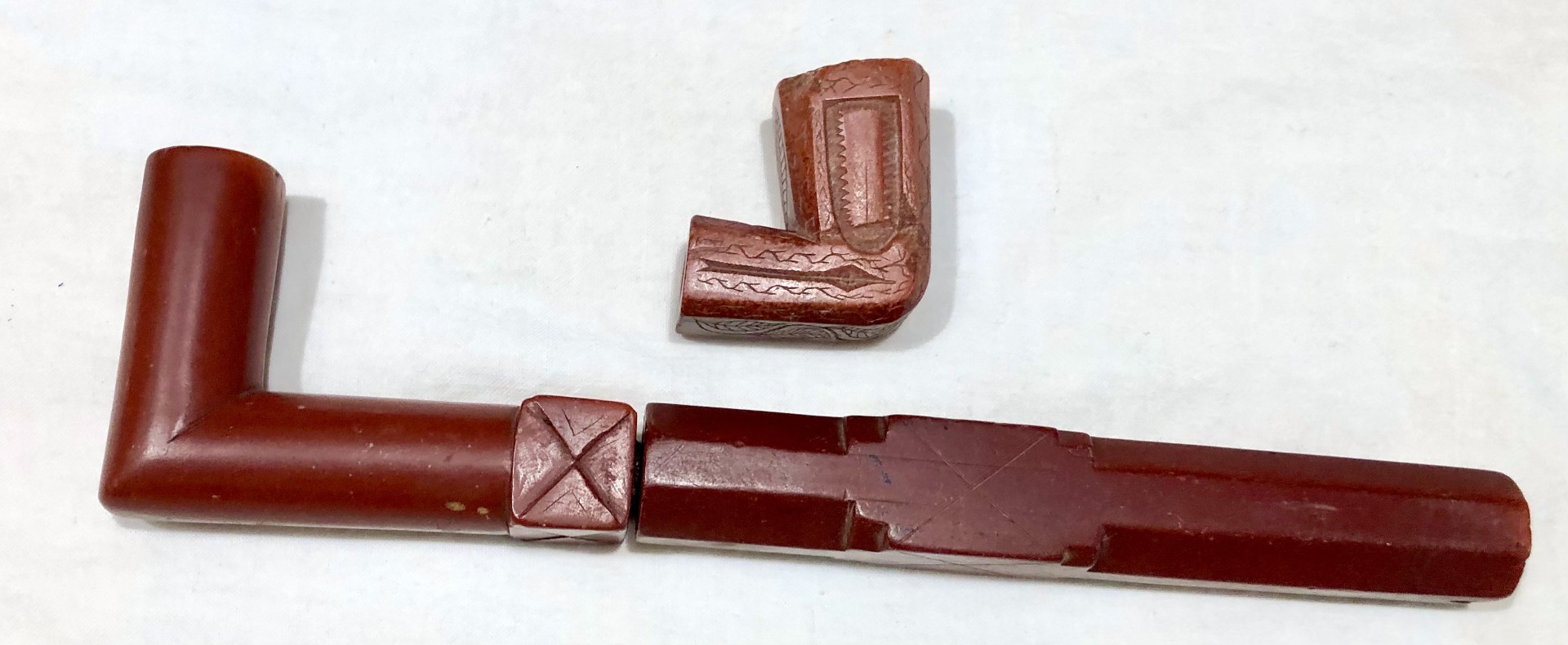
- Elbow Pipes. The next simplest and most common is an elbow pipe. These have an “L” shape similar to Euro-American pipes. They range in style from simple to elaborate designs. They can be just a bowl with a wood stem or may have catlinite stems.
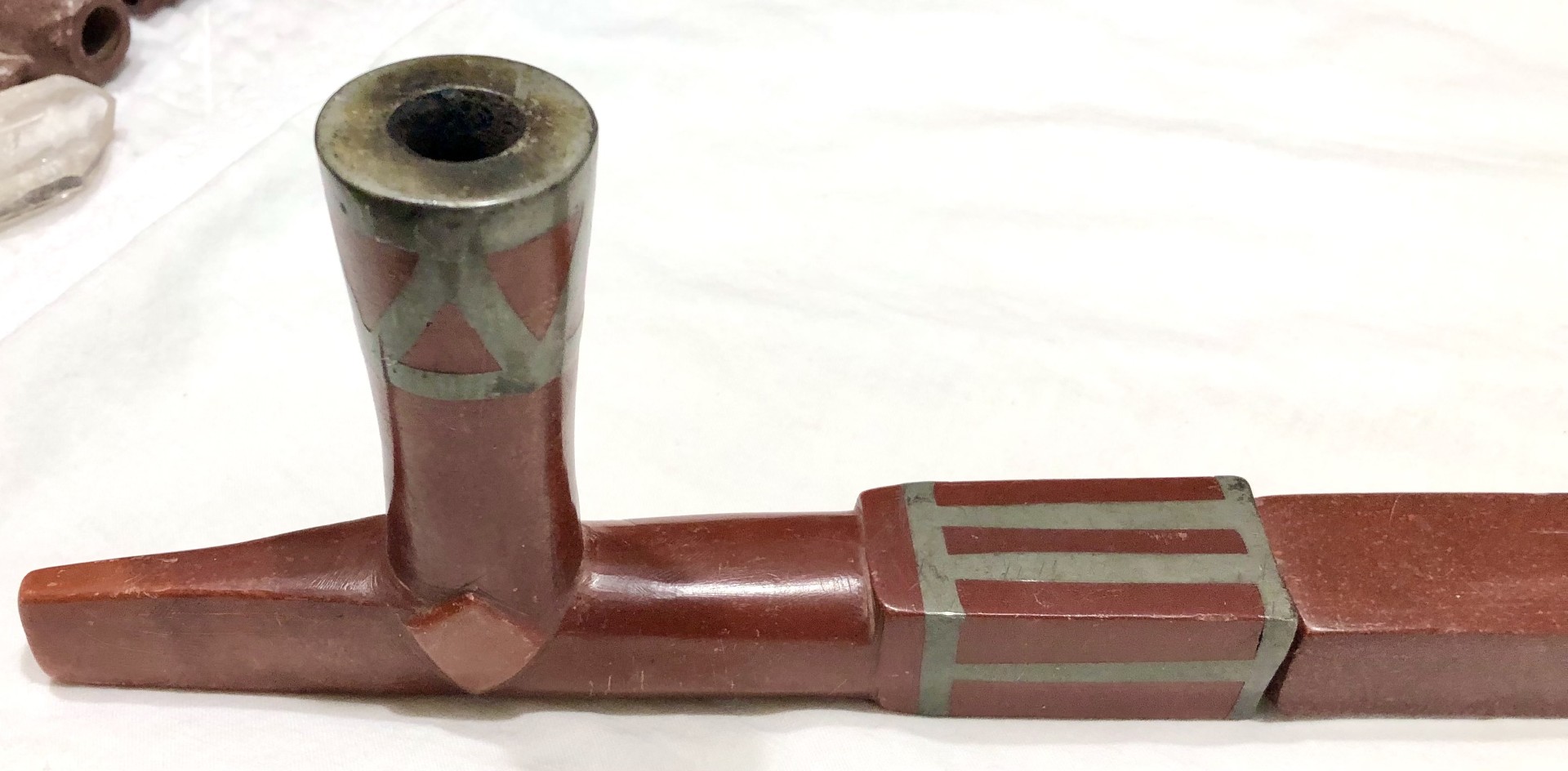
- Calumets. Calumets are perhaps the most familiar catlinite pipe. Named by French fur traders, the name generally means “pipe of peace.” It was the predominant style used during the fur trade industry. They are large elbow pipes with an “anterior projection” in the front of the bowl. They are sometimes called “Plains Pipes” because that is the geographical area where they were most commonly used. They are also known as ‘”Peace Pipes” as a translation of the French name.
- Crested Pipes. Crested pipes are a subset of elbow or calumet pipes. They have a thin, vertical ridge running down the middle of the top of the pipe’s stem side but not down the attached stem. They typically have a row of notches on the ridge top. Crested pipes are an older pipe type that was used less at the time of white contact.
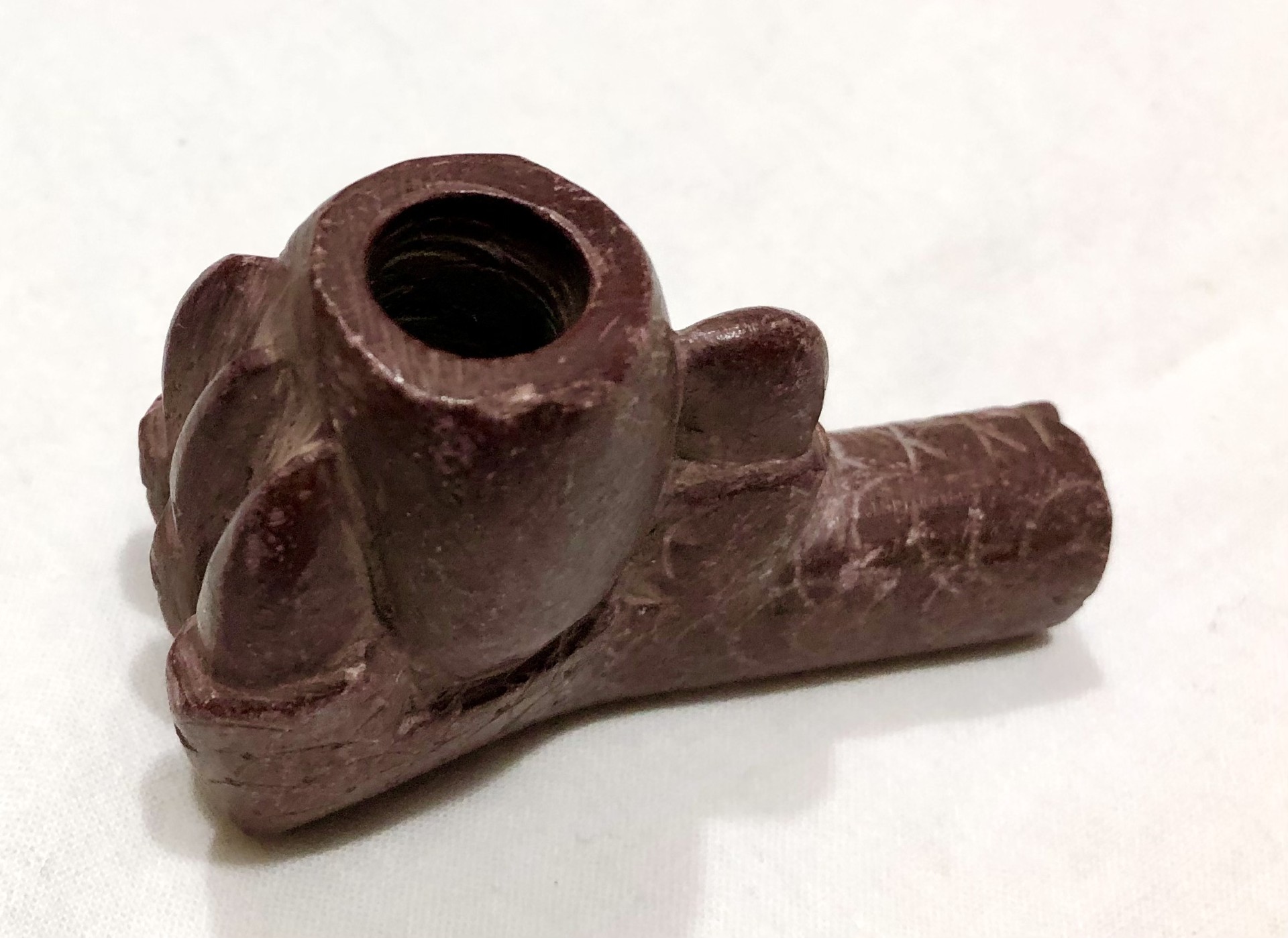
- Effigy Pipes. Effigy pipes are wholly or partially in the shape of animals or objects. Bison effigy pipes are one type – understandable given their importance of Bison. Hopewellian pipes frequently have bird effigies. Other animal effigy pipes include beaver, horse, wolves, etc.
- Claw Pipes. Claw effigy pipes are interesting in that they are an effigy of only one part of an animal – a raptor’s (presumably eagle) claw. The claw appears to be holding the pipe bowl between its talons, with the leg forming the stem.
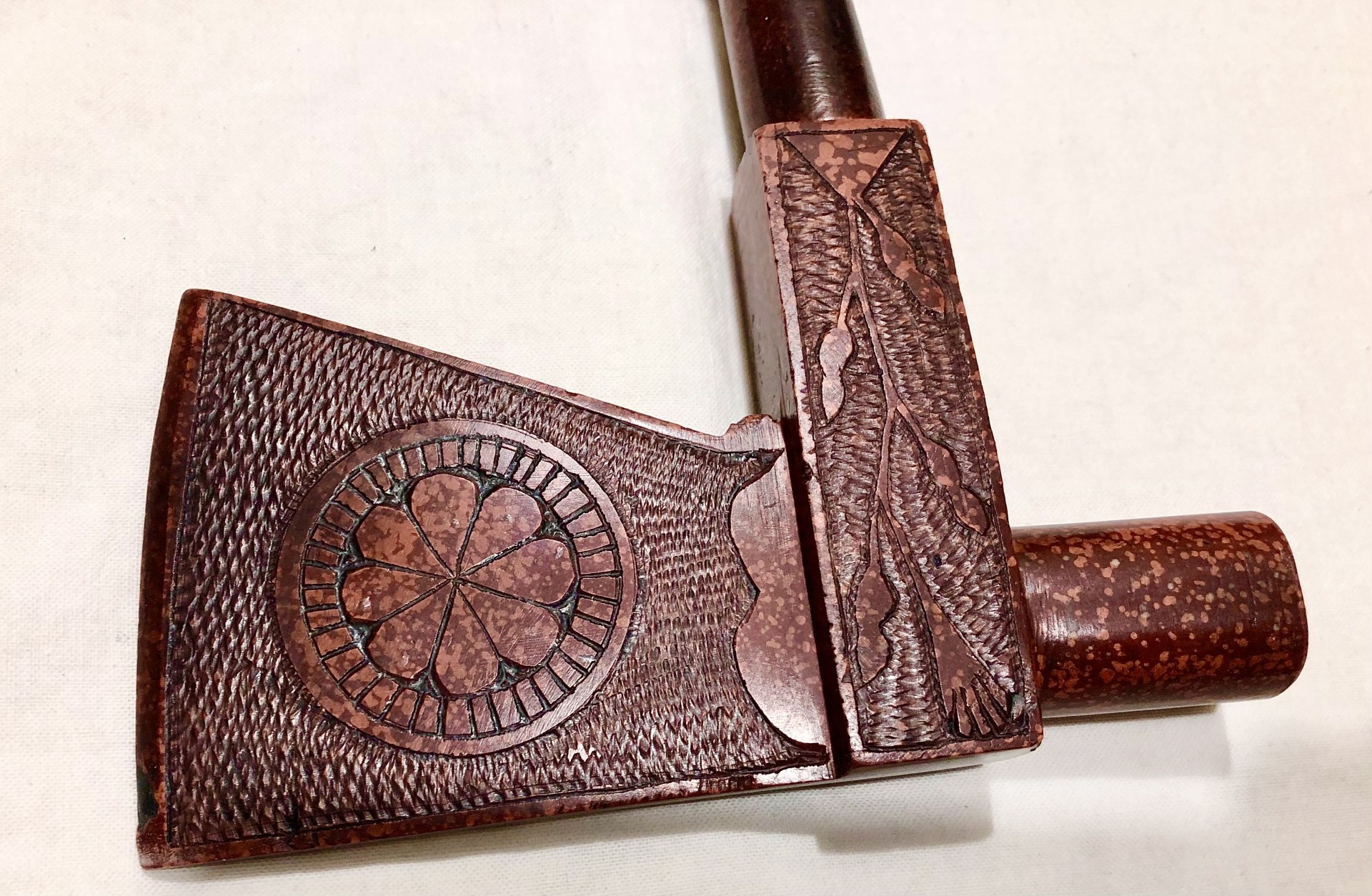
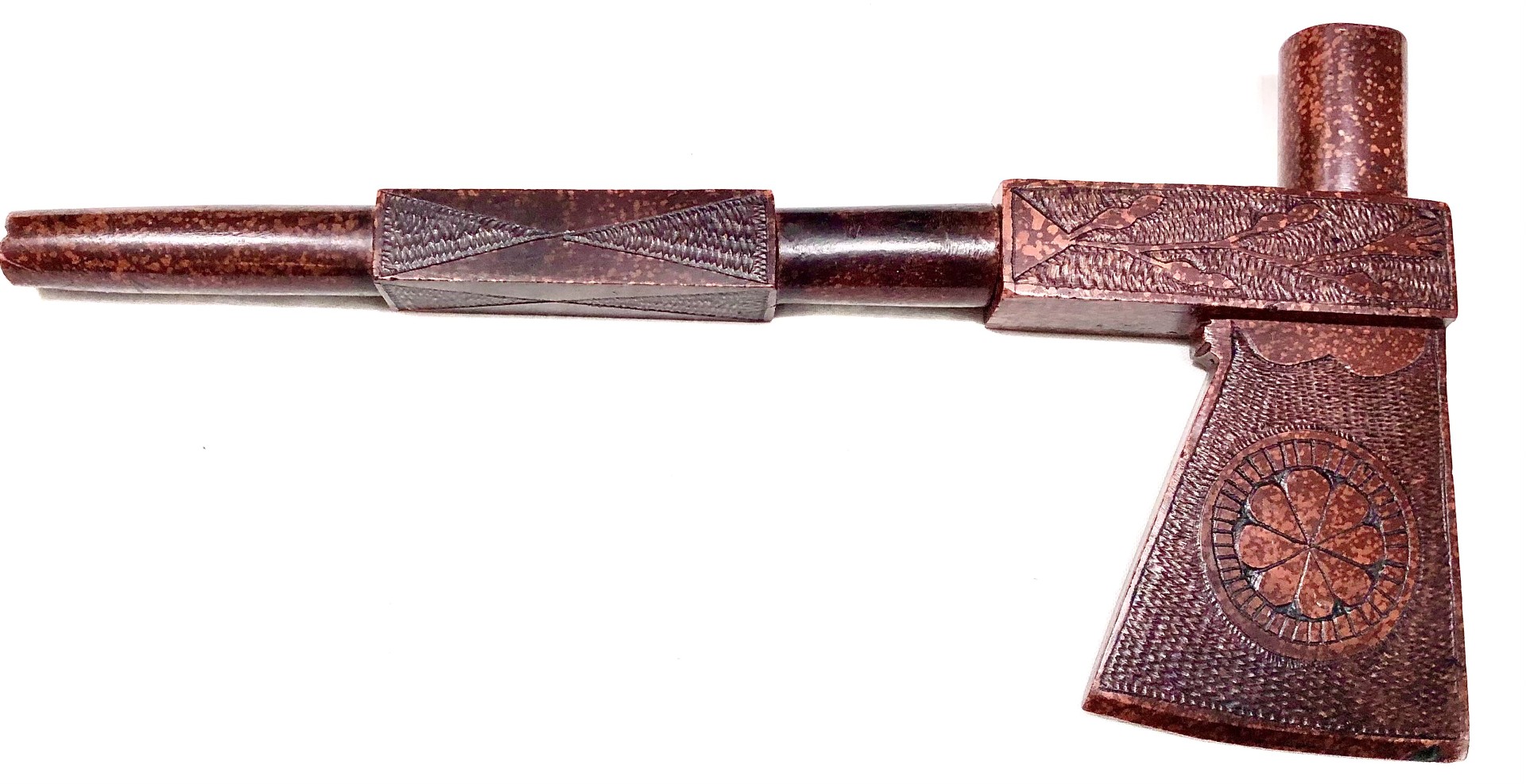
- Trade Hatchet Effigy Pipes. Trade hatchet effigy pipes are very unusual in that they are a pipe effigy of a pipe, and not something from nature. They are an effigy of a French fur trade iron hatchet pipe. This fur trade item was an unusual combination of functional hatchet and pipe. The bowl was opposite the blade and smoked through a top projection. Catlinite pipes of this type copied the form including the hatchet handle in catlinite. Like the iron trade item, they were functional pipes, but were unusable as hatchets. They typically were highly decorated. They are most commonly associated with the Ojibewa/Chippewa, as they were actively engaged in the French fur trade.
Catlinite was ideal for pipes because it is very heat resistant. It does not crack/shatter from intense heat as it has a low and uniform heat expansion rate. It is interesting to note that catlinite comes from kaolinite clay which is typically used for pottery for the same reasons.
Other uses of Catlinite: Catlinite had many other secondary uses such as:
- Personal jewelry: Amulets, round earplugs, beads, bangles, tubes.
- Effigies: similar to ones on pipes, but freestanding. For spiritual, decorative, and unknown uses.
- Incised tablets of presumably spiritual significance. Drawings of people, animals, spiritual beings, etc. Potential maps.
- Post-contact souvenirs such as salt & pepper shakers, stamp holders, ashtrays, toothpick holders, and many effigies (arrowheads, turtles, tomahawks, etc.).
In closing, catlinite is a beautiful buttery smooth red stone that has been an important part of Native American culture for thousands of years. It is ideally suited for pipes, and has been used in this capacity to create a wide range of pipes in many forms. These pipes were used for the highest expression of spiritual beliefs, and for the simple pleasure of sharing a pleasant smoke with a friend.




 Central Dakota Gem & Mineral Society